QuERC(us), The Body Electrome
On emergent fields of queer ecology: a curatorial record of three years of Queer Ecologies Research CollectivesAlex A. Jones
“Matter is not a thing, but a doing, a congealing of agency” — Karen Barad [1]
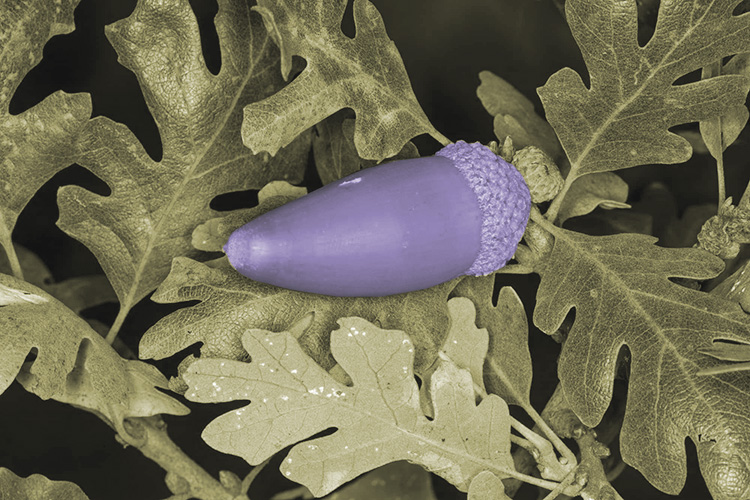
There is secret knowledge held in a seed. It carries everything it needs to know about how to become a body in a world it hasn’t yet encountered. Each of its cells holds a complete genome that encodes millions of years of evolutionary conventions for building a body. The seed also holds epigenetic ‘memories’ that can inform its adaptation to present conditions. These often reflect the lived experience of the mother plant, which passes along tools like stored RNAs, altered hormone balances, endophytic microbes, and patterns of DNA methylation that prime gene expressions for change, all of which can further tune the seed’s becoming. If the mother plant developed under stress from drought, for instance, its seeds might inherit epigenetic markers that shift their growth toward lesser dependence on water.
Professor Timothy Morton remarked, as this year’s guest speaker for the Queer Ecologies Research Collective, that our acronymn “QuERC” recalls Quercus, the taxonomic genus of Oak. On reflection, this connection amounts to far more than a nominal resemblance—but the Queer Ecologies Research Collective is less like an oak tree than it is like an acorn. It is a project more concerned with conditions of emergence than with mature forms. Like a seed, to reach its most ambitious scale, the work begins underground, in a period of burial or latency. This essay must follow suit, and—rather than beginning with definitions or assertions—linger in the soil where my own understanding of queer ecology has emerged. It is in the soil that we can also decompose inherited knowledge, preparing the ground for something new.
Professor Timothy Morton remarked, as this year’s guest speaker for the Queer Ecologies Research Collective, that our acronymn “QuERC” recalls Quercus, the taxonomic genus of Oak. On reflection, this connection amounts to far more than a nominal resemblance—but the Queer Ecologies Research Collective is less like an oak tree than it is like an acorn. It is a project more concerned with conditions of emergence than with mature forms. Like a seed, to reach its most ambitious scale, the work begins underground, in a period of burial or latency. This essay must follow suit, and—rather than beginning with definitions or assertions—linger in the soil where my own understanding of queer ecology has emerged. It is in the soil that we can also decompose inherited knowledge, preparing the ground for something new.
For decades, queer theory has questioned the historical framework of ‘Nature,’ identifying in it a governing logic that has separated types of bodies, and enforced those separations. If Nature is a ‘mother,’ then it is the mother of all binaries: animal and human, male and female, self and other, living and dead, good and evil, master and slave. And as long as this binary logic has held, queerness has been cast as the unnatural, as that which fails to fit Nature’s conceptual grid. But reality isn’t really a grid. In 2010, Timothy Morton proposed that queer ecology was a field for envisioning a different framework:
Morton’s mesh drew explicitly on Eve Kosofsky Sedgwick, who defined queerness in 1993 as an “open mesh of possibilities, gaps, overlaps, dissonances and resonances, lapses and excesses of meaning.” [4] Sedgwick’s point was that queerness named a logic with implications beyond the territory of sexuality and gender identity—that it unsettles binary ways of sorting the world. For queer ecologists, the mesh remains an indispensable image, offering a model capable of upsetting Nature’s rigid ontology. On its own, however, the mesh risks staying too diffuse, supplying an image of fluidity without accounting for how differences come to matter. The mesh shows us that everything is connected, but not yet how connection works.
I propose that life-forms constitute a mesh, a nontotalizable, open-ended concatenation of interrelations that blur and confound boundaries at practically any level: between species, between the living and the nonliving, between organism and environment. [3]
Morton’s mesh drew explicitly on Eve Kosofsky Sedgwick, who defined queerness in 1993 as an “open mesh of possibilities, gaps, overlaps, dissonances and resonances, lapses and excesses of meaning.” [4] Sedgwick’s point was that queerness named a logic with implications beyond the territory of sexuality and gender identity—that it unsettles binary ways of sorting the world. For queer ecologists, the mesh remains an indispensable image, offering a model capable of upsetting Nature’s rigid ontology. On its own, however, the mesh risks staying too diffuse, supplying an image of fluidity without accounting for how differences come to matter. The mesh shows us that everything is connected, but not yet how connection works.
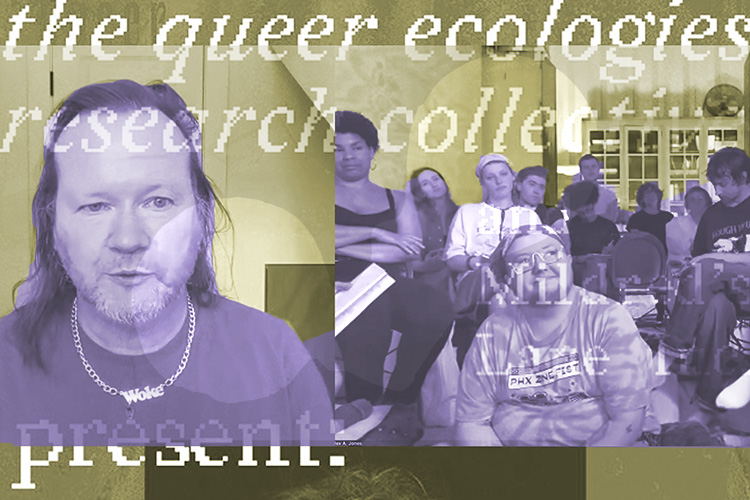
This limit became apparent to me through the practice of the Queer Ecologies Research Collective, which has functioned as a test chamber for what the mesh can’t fully explain: not that everything is entangled, but how particular relations intensify, stabilize, and acquire force. In summer 2023, Nicholas di Benedetto and I first convened the Queer Ecologies Research Collective, which quickly became known as QuERC, in order to explore the deceptively simple question: “what is queer ecology?” Our instinct was that it wouldn’t yield its insights through theory alone. Nothing truly queer can be defined. And if the ambition to “queer” ecology implies an unsettling of normative methods, then research must be staged as an embodied practice, rather than a purely conceptual one. Queer life, like ecological consciousness, is lived through bodies, and cannot be resolved into definition without loss.
So we invited a group of practitioners from varied backgrounds—artists, scholars, performers, organizers—into a shared environment for a week of sustained exchange. [2] We proposed that this collective constituted a kind of body. This was not a romantic metaphor about unity or consensus, but a wager that knowledge is shaped by the conditions that generate it. After three annual iterations, certain patterns have emerged in the dynamics of the QuERC body. Each gathering unfolds through an “emergent syllabus” that allows lectures to give way to workshops, meals to become seminars, performances to fold into readings. This structure is deliberately fluid, designed to accomodate multiple methods, but it is never boundless, for attention is finite, energies are uneven, and activity must be shaped by the inclinations of participants. With bodies, with academic work, with desire—not everything can happen at once, and not everything is equally possible. Connection must be sustained and negotiated.
QuERC has taught me that queer ecology needs a language for this unevenness, for the dynamics by which relations become consequential within the fluidity of the mesh. In germinal terms, QuERC has functioned as a medium of emergence, showing me that queer ecology cannot be approached as an abstract field any more than an oak can be grown without soil. So this essay works through QuERC as a situated experiment, focusing on its 2025 gathering, Gnosis / Initiates / Soma, as a case study for how queer ecology is performed—not only by its original participants, but by its retelling. Spanning scientific, artistic, occult, and archival systems, I will trace how bodies and knowledge emerge through membranes and thresholds, through seeds and cells, batteries and rituals. This text edges toward a theory of embodiment for queer ecology, one grounded not in categorical or stable forms—neither in identity, organism, nor species—but in processes of emergence. What follows is not an attempt to define queer ecology as a field, but to reveal how a field is generated.
So we invited a group of practitioners from varied backgrounds—artists, scholars, performers, organizers—into a shared environment for a week of sustained exchange. [2] We proposed that this collective constituted a kind of body. This was not a romantic metaphor about unity or consensus, but a wager that knowledge is shaped by the conditions that generate it. After three annual iterations, certain patterns have emerged in the dynamics of the QuERC body. Each gathering unfolds through an “emergent syllabus” that allows lectures to give way to workshops, meals to become seminars, performances to fold into readings. This structure is deliberately fluid, designed to accomodate multiple methods, but it is never boundless, for attention is finite, energies are uneven, and activity must be shaped by the inclinations of participants. With bodies, with academic work, with desire—not everything can happen at once, and not everything is equally possible. Connection must be sustained and negotiated.
QuERC has taught me that queer ecology needs a language for this unevenness, for the dynamics by which relations become consequential within the fluidity of the mesh. In germinal terms, QuERC has functioned as a medium of emergence, showing me that queer ecology cannot be approached as an abstract field any more than an oak can be grown without soil. So this essay works through QuERC as a situated experiment, focusing on its 2025 gathering, Gnosis / Initiates / Soma, as a case study for how queer ecology is performed—not only by its original participants, but by its retelling. Spanning scientific, artistic, occult, and archival systems, I will trace how bodies and knowledge emerge through membranes and thresholds, through seeds and cells, batteries and rituals. This text edges toward a theory of embodiment for queer ecology, one grounded not in categorical or stable forms—neither in identity, organism, nor species—but in processes of emergence. What follows is not an attempt to define queer ecology as a field, but to reveal how a field is generated.
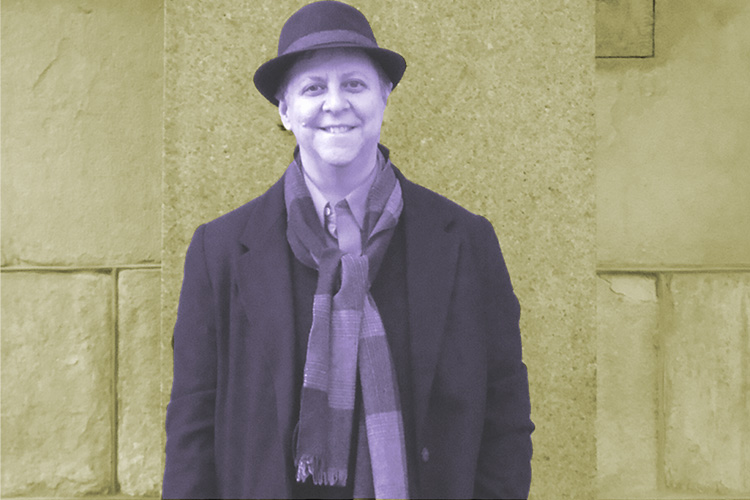
If Sedgwick and Morton’s mesh gave queer ecology a way to imagine entanglement, Karen Barad has offered a way to understand how entanglement becomes consequential. A theoretical physicist and philosopher, Barad works at the intersection of quantum field theory, science studies, and queer feminist ethics. Barad brings questions of power and embodiment into dialogue with the conceptual resources of quantum mechanics, a field in which particles do not precede their interactions, and where observation itself is known to alter what is observed. [5] Matter, argues Barad, is not something that exists, but something that happens. In Barad’s theory of intra-action, bodies, objects, and subjects are never given in advance. They emerge as temporary and contingent stabilizations of energy, materiality, and meaning.
Barad’s articulation of matter invites attention toward bodies whose form is not settled, or those which exist primarily as potentials. A seed is thus a very important figure for queer ecologists to consider, not as a metaphor or a mascot, but as a model of conditional becoming. An acorn is like a time-compressed oak tree, a whole future plant folded into a tiny packet; yet it is not a blueprint of a tree, and it does not guarantee a future oak. It carries a field of potentials whose realization depends on conditions it can’t control—water, soil, timing—and on thresholds that it may never cross. Most seeds never germinate. Yet they are not wasted when they decay into the soil or become food for animals. As their stored energies are redistributed, they quite literally build the ground from which other life emerges. The power of the seed is therefore not in the success of any single form, but in the ongoing preparation of conditions. The seed’s agency lies in its capacity to hold tensions long enough for a future to become possible.
In “Posthumanist Performativity” (2003), Barad explicitly asks us to consider how a view of matter as a doing rather than a being affects our ability to imagine what is possible, and how it might lead us to “intervene in the world’s becoming.” Agency, in Barad’s view, isn’t an attribute that belongs to a subject, but an ongoing process of reconfiguring embodiment; agency is an effect of the processes by which matter and meaning are continually held, cut, and rearticulated. This idea foreshadows a later definition of queerness as a kind of agency, which was posed by Jose Estaban Muñoz in 2010. Muñoz characterized ‘queer’ as a verb rather than a descriptor, as “a mode of desiring that allows us to see and feel beyond the quagmire of the present.” [6] Queerness, in this sense, is not a fixed identity but an orientation toward potential forms of life that are not yet fully legible.
This is the kind of thinking that originates ‘queer ecology’ as a field of potential. Ecology studies lived conditions, particularly how bodies and environments produce each other. Ecological systems are contingent and porous. Ecological thought is also inevitably future-oriented in the face of a sixth mass extinction and other crises of planetary livability. Ecology asks not only what lives and dies, but what could live if relations were otherwise—materially, socially, conceptually. Queer ecology does not just apply a quality of queerness to this way of thinking. It helps loosen the binary habits of mind that make ecological complexity hard to perceive and inhabit. Queer ecology names an overlap between methods of thought that refuse neat partitions, and insist that mattering happens in threshholds, mixtures, and forms that don’t resolve into either-or.
In 2025, queer orientations are once again framed as political threats in U.S. public institutions, with federal actions targeting “DEI” infrastructure and “gender ideology” in education and research. Under such conditions, futurity must be protected, and sometimes concealed. In this context, for the third annual QuERC, Nick and I gathered a research collective around the theme of secret knowledge. The project remained a vehicle for asking how queer ecology is generated and transmitted. Therefore, secrecy and ritual emerged as more than symbolic motifs, as necessary research methods when queer knowledge cannot survive full exposure or institutional capture.
Barad’s articulation of matter invites attention toward bodies whose form is not settled, or those which exist primarily as potentials. A seed is thus a very important figure for queer ecologists to consider, not as a metaphor or a mascot, but as a model of conditional becoming. An acorn is like a time-compressed oak tree, a whole future plant folded into a tiny packet; yet it is not a blueprint of a tree, and it does not guarantee a future oak. It carries a field of potentials whose realization depends on conditions it can’t control—water, soil, timing—and on thresholds that it may never cross. Most seeds never germinate. Yet they are not wasted when they decay into the soil or become food for animals. As their stored energies are redistributed, they quite literally build the ground from which other life emerges. The power of the seed is therefore not in the success of any single form, but in the ongoing preparation of conditions. The seed’s agency lies in its capacity to hold tensions long enough for a future to become possible.
In “Posthumanist Performativity” (2003), Barad explicitly asks us to consider how a view of matter as a doing rather than a being affects our ability to imagine what is possible, and how it might lead us to “intervene in the world’s becoming.” Agency, in Barad’s view, isn’t an attribute that belongs to a subject, but an ongoing process of reconfiguring embodiment; agency is an effect of the processes by which matter and meaning are continually held, cut, and rearticulated. This idea foreshadows a later definition of queerness as a kind of agency, which was posed by Jose Estaban Muñoz in 2010. Muñoz characterized ‘queer’ as a verb rather than a descriptor, as “a mode of desiring that allows us to see and feel beyond the quagmire of the present.” [6] Queerness, in this sense, is not a fixed identity but an orientation toward potential forms of life that are not yet fully legible.
This is the kind of thinking that originates ‘queer ecology’ as a field of potential. Ecology studies lived conditions, particularly how bodies and environments produce each other. Ecological systems are contingent and porous. Ecological thought is also inevitably future-oriented in the face of a sixth mass extinction and other crises of planetary livability. Ecology asks not only what lives and dies, but what could live if relations were otherwise—materially, socially, conceptually. Queer ecology does not just apply a quality of queerness to this way of thinking. It helps loosen the binary habits of mind that make ecological complexity hard to perceive and inhabit. Queer ecology names an overlap between methods of thought that refuse neat partitions, and insist that mattering happens in threshholds, mixtures, and forms that don’t resolve into either-or.
In 2025, queer orientations are once again framed as political threats in U.S. public institutions, with federal actions targeting “DEI” infrastructure and “gender ideology” in education and research. Under such conditions, futurity must be protected, and sometimes concealed. In this context, for the third annual QuERC, Nick and I gathered a research collective around the theme of secret knowledge. The project remained a vehicle for asking how queer ecology is generated and transmitted. Therefore, secrecy and ritual emerged as more than symbolic motifs, as necessary research methods when queer knowledge cannot survive full exposure or institutional capture.
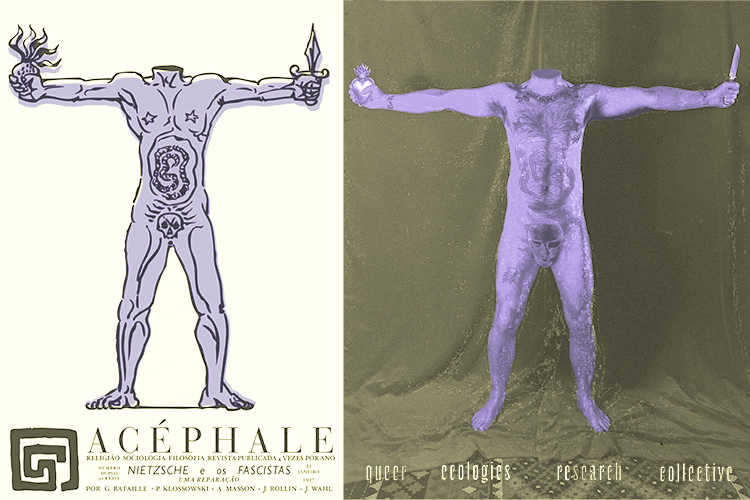
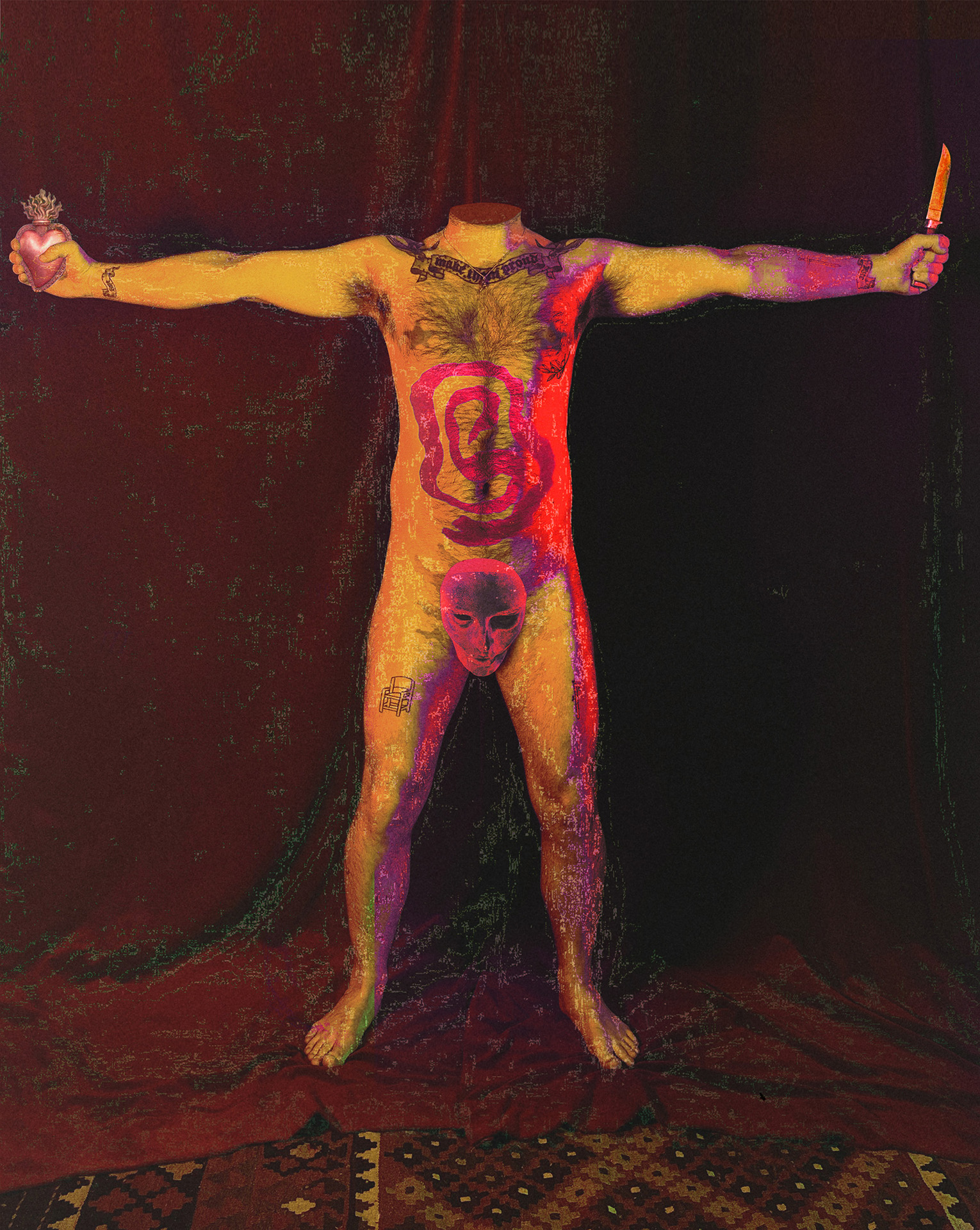
We took some inspiration from Acéphale, the secret society founded by Georges Bataille in late-1930s France as authoritarian logics hardened across Europe, limiting horizons of creative expression and survival. Bataille linked the political refusal of fascism with a rejection of Western rational philosophy. Fascism is an ideology rooted in the extreme rational impulse to impose taxonomies onto society that can justify violence (national vs. foreign, pure vs. impure, productive vs. parasitic). [7] Acéphale was envisioned as a “sacred conspiracy” to engage visceral and ecstatic ways of knowing as antidotes to the poison of ‘pure reason.’ This concept was embodied in the emblem of a headless human, drawn by André Masson, with a serpent coiling in its gut and a grinning skull emblazoning its groin.
Holding forth a knife and a burning heart, this headless figure also alluded to ritual sacrifice, linking Acéphale to traditions of mysticism where truth emerges through arcane ceremonial rites. Bataille was fascinated with such practices, from the mystery cults of Ancient Greece to Aztec human sacrifice, because of their capacity to generate what Durkheim had called “moments of collective ferment.” Ritual could also preserve forms of knowledge that depend upon embodied participation, which cannot survive abstraction or wider circulation. [8] Whatever secret rituals may have actual taken place within Acéphale remains a matter of speculation; publicly, the society published an experimental journal. “Secretly or not,” Bataille wrote in its first issue in 1936, “it is necessary to become otherwise, or else cease to be.” [9] Here, secrecy is framed as a means of keeping knowledge alive in the midst of hostile conditions—not as a matter of obscurity, but of futurity.
Holding forth a knife and a burning heart, this headless figure also alluded to ritual sacrifice, linking Acéphale to traditions of mysticism where truth emerges through arcane ceremonial rites. Bataille was fascinated with such practices, from the mystery cults of Ancient Greece to Aztec human sacrifice, because of their capacity to generate what Durkheim had called “moments of collective ferment.” Ritual could also preserve forms of knowledge that depend upon embodied participation, which cannot survive abstraction or wider circulation. [8] Whatever secret rituals may have actual taken place within Acéphale remains a matter of speculation; publicly, the society published an experimental journal. “Secretly or not,” Bataille wrote in its first issue in 1936, “it is necessary to become otherwise, or else cease to be.” [9] Here, secrecy is framed as a means of keeping knowledge alive in the midst of hostile conditions—not as a matter of obscurity, but of futurity.
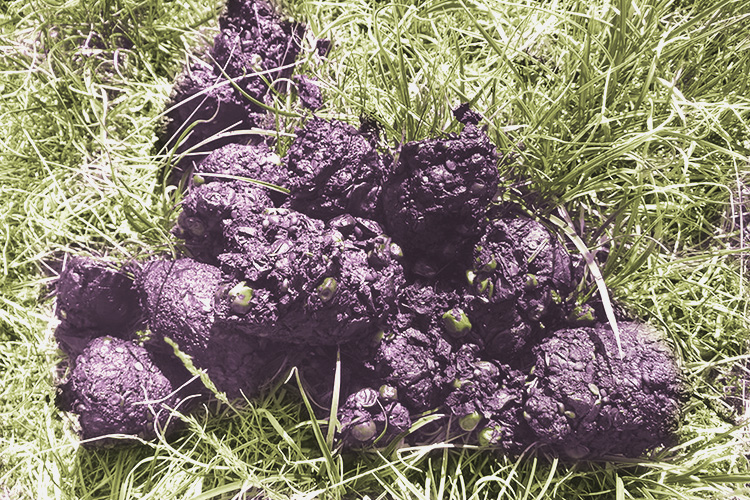
Queer social histories have long depended on tactics of secrecy, from encoded speech to underground media networks and gatherings. At QuERC III, Atlas A. Reid contributed a zine collection to the emergent syllabus, supplying an archive for how queer knowledge is transmitted through fragile, low-tech architectures that persist by circulating outside official channels. Secrecy here is a subtle means of transmission, like the passage of a seed through the digestive system of an animal. This is not only a means of transport for a plant. Oftentimes, seeds are altered by the host’s digestion in ways that are integral to their germination: gastric acids and enzymes scarify impermeable seed coats that must be chemically unlocked; deposition in feces can also provide a localized packet of moisture, microbes, and nitrogen for the seed. As suggested by the headless figure of Acéphale, knowledge is something metabolized in the gut, not stored in the head. Secrecy can be a digestive process.
The rejection of rationalist supremacy that animated Acéphale finds a more sustained articulation in recent Native American scholarship that has rigorously interrogated the production of knowledge in Western academia. In his critique of objectivity as the defining value of Western research, the Chickasaw scholar Eber Hampton speaks, from a different historical position, to the same fantasy of disembodied knowledge that Bataille proposed decapitating:
Scholars such as Hampton, Shawn Wilson (Opaskwayak Cree), Vine Deloria Jr. (Standing Rock Sioux), Gregory Cajete (Tewa Pueblo), and Robin Wall Kimmerer (Potawatomi) have reframed research as neither neutral nor innocent, drawing it towards ethical accountability. Their indigenous epistemologies offer concrete alternatives that have crucially oriented QuERC, as a project for devising research methods appropriate to queer ecologies. This influence has been especially important in addressing areas where queer theory is historically weakest, namely in questions of accountability to land, place, and multispecies relations.
Queerness is not a solvent for difference that aims to dissolve boundaries between Indigenous and Western thought. Ideally it is a mode of staying with differences, of holding multiple ways of knowing in productive tension without forcing equivalence, synthesis, or reconciliation. Where Indigenous research paradigms demand enduring relations to land and community, queer ecology may offer a practice for remaining attentive to asymmetry, complexity, and nonduality. Together these fields demand research that is accountable without being prescriptive, situated without being insular, and embodied without abandoning rigor.
Shawn Wilson, in Research is Ceremony, clarifies this ethical stance by defining research itself as a ceremonial practice that “brings relationships together,” binding participants to ongoing responsibilities and bridging “the distance between aspects of our cosmos and ourselves.” [11] In contrast with Western conventions that tend to abstract and extract knowledge—treating it as something that can be written down, carried away, and sold—the idea of research as a kind of “ceremony” asserts that knowledge belongs to its generative context. It also insists that participants are changed by the research process itself. For QuERC III, ritual was named as a methodology to explore that might translate our commitments to embodied knowledge into praxis.
Thus our annual slogan, Gnosis / Initiates / Soma: “Knowledge begins the body.” This mantra inverts a Western bias that casts the body as unintelligent matter, merely the host for transcendent thought. Gnosis initiates soma instead invokes knowledge as something germinal and metabolic. ‘Initiate’—both verb and noun—suggests awakening into new relations with matter and time. Soma is “the body” in ancient Greek, but in Vedic Sanskrit it refers to a fabled ritual drink made from the bodies of plants or fungi. This soma is a medium through which gnosis is physically imbibed. [12]
The rejection of rationalist supremacy that animated Acéphale finds a more sustained articulation in recent Native American scholarship that has rigorously interrogated the production of knowledge in Western academia. In his critique of objectivity as the defining value of Western research, the Chickasaw scholar Eber Hampton speaks, from a different historical position, to the same fantasy of disembodied knowledge that Bataille proposed decapitating:
Emotionless, passionless, abstract, intellectual, academic research is a goddamn lie, it does not exist.... Humans—feeling, living, breathing, thinking humans—do research. When we try to cut ourselves off at the neck and pretend an objectivity that does not exist in the human world, we become dangerous, to ourselves first, and then to the people around us. [10]
Scholars such as Hampton, Shawn Wilson (Opaskwayak Cree), Vine Deloria Jr. (Standing Rock Sioux), Gregory Cajete (Tewa Pueblo), and Robin Wall Kimmerer (Potawatomi) have reframed research as neither neutral nor innocent, drawing it towards ethical accountability. Their indigenous epistemologies offer concrete alternatives that have crucially oriented QuERC, as a project for devising research methods appropriate to queer ecologies. This influence has been especially important in addressing areas where queer theory is historically weakest, namely in questions of accountability to land, place, and multispecies relations.
Queerness is not a solvent for difference that aims to dissolve boundaries between Indigenous and Western thought. Ideally it is a mode of staying with differences, of holding multiple ways of knowing in productive tension without forcing equivalence, synthesis, or reconciliation. Where Indigenous research paradigms demand enduring relations to land and community, queer ecology may offer a practice for remaining attentive to asymmetry, complexity, and nonduality. Together these fields demand research that is accountable without being prescriptive, situated without being insular, and embodied without abandoning rigor.
Shawn Wilson, in Research is Ceremony, clarifies this ethical stance by defining research itself as a ceremonial practice that “brings relationships together,” binding participants to ongoing responsibilities and bridging “the distance between aspects of our cosmos and ourselves.” [11] In contrast with Western conventions that tend to abstract and extract knowledge—treating it as something that can be written down, carried away, and sold—the idea of research as a kind of “ceremony” asserts that knowledge belongs to its generative context. It also insists that participants are changed by the research process itself. For QuERC III, ritual was named as a methodology to explore that might translate our commitments to embodied knowledge into praxis.
Thus our annual slogan, Gnosis / Initiates / Soma: “Knowledge begins the body.” This mantra inverts a Western bias that casts the body as unintelligent matter, merely the host for transcendent thought. Gnosis initiates soma instead invokes knowledge as something germinal and metabolic. ‘Initiate’—both verb and noun—suggests awakening into new relations with matter and time. Soma is “the body” in ancient Greek, but in Vedic Sanskrit it refers to a fabled ritual drink made from the bodies of plants or fungi. This soma is a medium through which gnosis is physically imbibed. [12]
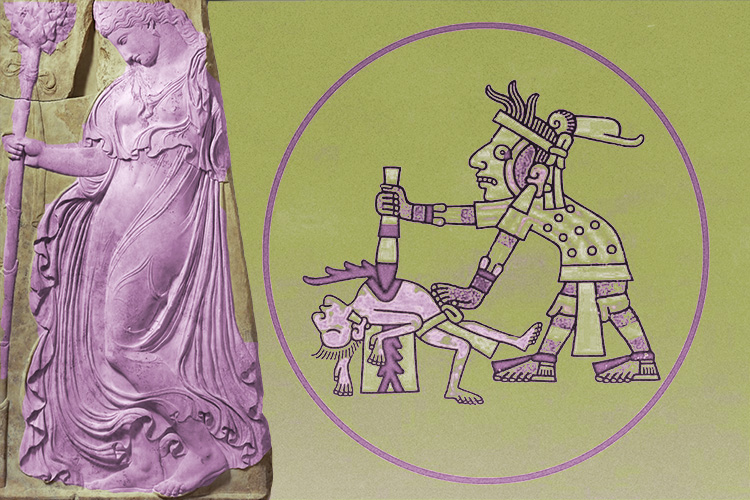
If soma is embodied knowledge, then ritual is a method for metabolizing it, as well as scaling up its impact to collective, trans-historical, and even geologic time. In the context of recent art practice, Joseph Beuys demonstrated this principle in 7000 Oaks (1982), a social sculpture for which he initiated the planting of oak trees, paired with basalt marker-stones, throughout the city of Kassel. Beuys described the oak as “an element of regeneration, which in itself is a concept of time.” He noted the tree’s slow growth and solid heart wood as sculptural elements, speculating that these qualities made the tree sacred within ancient Druidic traditions. As both a spiritual instrument and a sculpture, the oak for Beuys embodied a kind of faith in the future. [13] His project reactivated that symbolic lineage, framing the ritual of planting trees as form of participation in the planet’s regenerative forces. In doing so, the artist attempted to bind social process to ecological accountability, proposing an embodied effect whose form would only become fully legible across decades, centuries, even millennia.
Similar to the inspiration Beuys found in Druidic lore, our framing for QuERC III looked to mystery traditions and occult intellectual histories not as belief systems but as methodological resources, offering ways of thinking about how knowledge is transmitted through repetition, concealment, and transformation rather than objective proof. We began the collective with a talking circle to explore participants’ lived relationships to ritual. The talk ranged widely, from organized religion and its refusals to domestic habits, composting practices, gender performance, and intuitive folk magic. What emerged was a shared recognition that ‘ritual’ names a broader field than esoteric ceremony alone.
Ritual describes repeated actions that can tune bodies to temporalities, forces, and responsibilities that exceed an individual life. Ritual is a way of learning to perceive and participate in knowledge that unfolds slowly, and often beyond perceptible legibility. Ritual does not only train “belief,” but attention to forces that do not announce themselves immediately—forces that perpetually accumulate and circulate, but only occasionally or gradually produce a visible discharge. One should not mistake the oak’s slowness for a lack of power. And a seed, however small, is like a storm held within a charged cloud. Its energetic discharge is the botanical shape it may eventually take—branch, root, bloom—which unfolds like lightning slowed down by many, many orders of magnitude. [14] Incidentally, when plants shift from a pattern of leafy growth to the production of flowers and seeds, they are said to “bolt.”
Similar to the inspiration Beuys found in Druidic lore, our framing for QuERC III looked to mystery traditions and occult intellectual histories not as belief systems but as methodological resources, offering ways of thinking about how knowledge is transmitted through repetition, concealment, and transformation rather than objective proof. We began the collective with a talking circle to explore participants’ lived relationships to ritual. The talk ranged widely, from organized religion and its refusals to domestic habits, composting practices, gender performance, and intuitive folk magic. What emerged was a shared recognition that ‘ritual’ names a broader field than esoteric ceremony alone.
Ritual describes repeated actions that can tune bodies to temporalities, forces, and responsibilities that exceed an individual life. Ritual is a way of learning to perceive and participate in knowledge that unfolds slowly, and often beyond perceptible legibility. Ritual does not only train “belief,” but attention to forces that do not announce themselves immediately—forces that perpetually accumulate and circulate, but only occasionally or gradually produce a visible discharge. One should not mistake the oak’s slowness for a lack of power. And a seed, however small, is like a storm held within a charged cloud. Its energetic discharge is the botanical shape it may eventually take—branch, root, bloom—which unfolds like lightning slowed down by many, many orders of magnitude. [14] Incidentally, when plants shift from a pattern of leafy growth to the production of flowers and seeds, they are said to “bolt.”
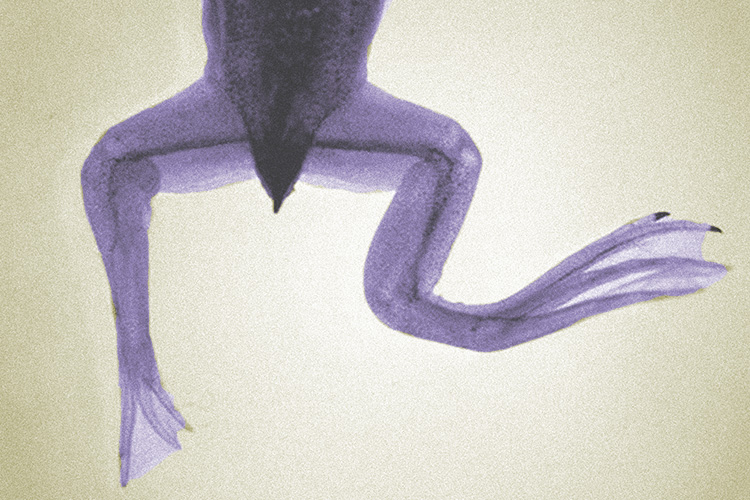
Electricity is not only a metaphor for life; it is an instrumental actor. In plants and animals alike, ions are constantly moving across cell membranes, generating electrical signals. Every living cell maintains a voltage differential between its inside and its outside, which is called its “membrane potential.” These gradients are how cells store and manage electrochemical energy, which they use to power metabolism, growth, and communication within and between themselves. Without this continual electrical work—maintaining differences, pumping ions, holding charge—cells would rapidly equilibrate with their surroundings, and life would cease.
The animal nervous system has refined its electrical agency through highly centralized processing centers in the brain and ganglia, which enable lightning-fast action across the system. In plants, electrical signaling is generally slower, moving in waves through the body’s tissues, working in tandem with hormones to coordinate responses to light, water, and touch. But the slowness of the plant bio-electrome must not be seen as a deficiency, for it confers its own evolutionary strengths. Some seeds can remain viable for millennia if they are kept dry. [15] Within that dormant seed, a multicellular plant embryo lies waiting, already charged with ionic potential, not quite electrically dead. When the membranes finally hydrate, ion pumping ramps up. Germination begins.
Spatial patterns of voltage within a germinating plant or animal embryo guide its tissue growth, working in tandem with genetic code to pulse limbs, organs, roots, and pigments into existence. In laboratories, biologists have been able to produce changes in morphology in animal embryos by manipulating these electrical signals, showing that DNA is not the deterministic Master of form—electricity plays a part as well. [16] Bioelectric patterning can be understood as one of the ways a body “feels” and rewrites its own conductive landscape as it grows. Queerness also dwells in spaces where potentials proliferate beyond the predictions of any code.
The animal nervous system has refined its electrical agency through highly centralized processing centers in the brain and ganglia, which enable lightning-fast action across the system. In plants, electrical signaling is generally slower, moving in waves through the body’s tissues, working in tandem with hormones to coordinate responses to light, water, and touch. But the slowness of the plant bio-electrome must not be seen as a deficiency, for it confers its own evolutionary strengths. Some seeds can remain viable for millennia if they are kept dry. [15] Within that dormant seed, a multicellular plant embryo lies waiting, already charged with ionic potential, not quite electrically dead. When the membranes finally hydrate, ion pumping ramps up. Germination begins.
Spatial patterns of voltage within a germinating plant or animal embryo guide its tissue growth, working in tandem with genetic code to pulse limbs, organs, roots, and pigments into existence. In laboratories, biologists have been able to produce changes in morphology in animal embryos by manipulating these electrical signals, showing that DNA is not the deterministic Master of form—electricity plays a part as well. [16] Bioelectric patterning can be understood as one of the ways a body “feels” and rewrites its own conductive landscape as it grows. Queerness also dwells in spaces where potentials proliferate beyond the predictions of any code.
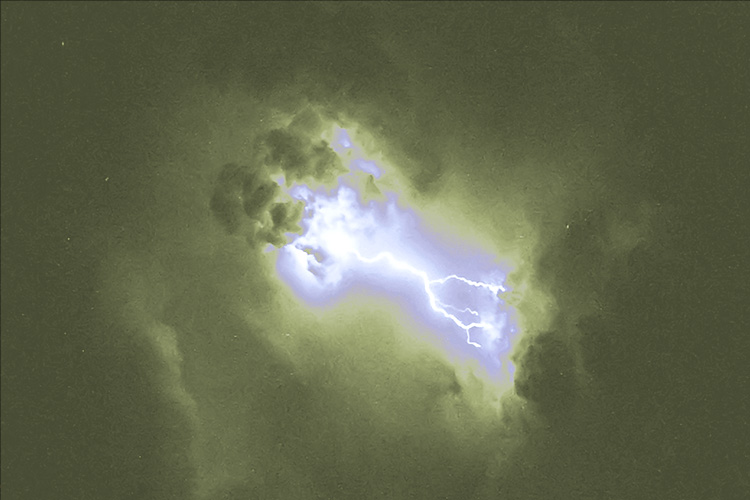
Barad (a perverted scientist) characterized lightning as the “energizing play of a desiring field.” The physicist-cum-queer theorist writes, in “Transmaterialities” (2003) that lightning embodies “matter’s experimental nature—its propensity to test out every un/imaginable path, every im/possibility. Matter is promiscuous and inventive in its agential wanderings.” [17] Bataille (a pervert, but not a scientist) also emphasized the connective, creative power of lightning in his erotic mythology:
Lightning does not simply strike downward from the sky, as if hurled by an Olympian force. A thunderstorm is a charged enclosure: through collisions of ice and turbulent updrafts, electrical differences accumulate inside the cloud, most of which never discharge at all. The storm holds its charge internally, sometimes for hours, testing countless unrealized paths. When lightning does occur, it begins as a tentative ionized channel escaping the cloud—a probing gesture. As this channel approaches the ground, objects like trees, buildings, stones and occasionally human bodies on Earth respond, sending faint upward streamers of charge to meet it. Lightning happens when these separate tendencies intra-act, completing a powerful circuit. The brilliant flash of lightning we see is called, erotically, the return stroke. It’s more like Jacob’s ladder than Zeus’s bolt. For Barad, lightning was the ultimate illustration of material agency: a moment when different charges find a conduit, and sudden intra-action occurs across a shared field.
The first form of solar love is a cloud raised up over the liquid element [the sea]. The erotic cloud sometimes becomes a storm, and falls back to Earth in the form of rain, while lightning staves in the layers of the atmosphere. [18]
Lightning does not simply strike downward from the sky, as if hurled by an Olympian force. A thunderstorm is a charged enclosure: through collisions of ice and turbulent updrafts, electrical differences accumulate inside the cloud, most of which never discharge at all. The storm holds its charge internally, sometimes for hours, testing countless unrealized paths. When lightning does occur, it begins as a tentative ionized channel escaping the cloud—a probing gesture. As this channel approaches the ground, objects like trees, buildings, stones and occasionally human bodies on Earth respond, sending faint upward streamers of charge to meet it. Lightning happens when these separate tendencies intra-act, completing a powerful circuit. The brilliant flash of lightning we see is called, erotically, the return stroke. It’s more like Jacob’s ladder than Zeus’s bolt. For Barad, lightning was the ultimate illustration of material agency: a moment when different charges find a conduit, and sudden intra-action occurs across a shared field.
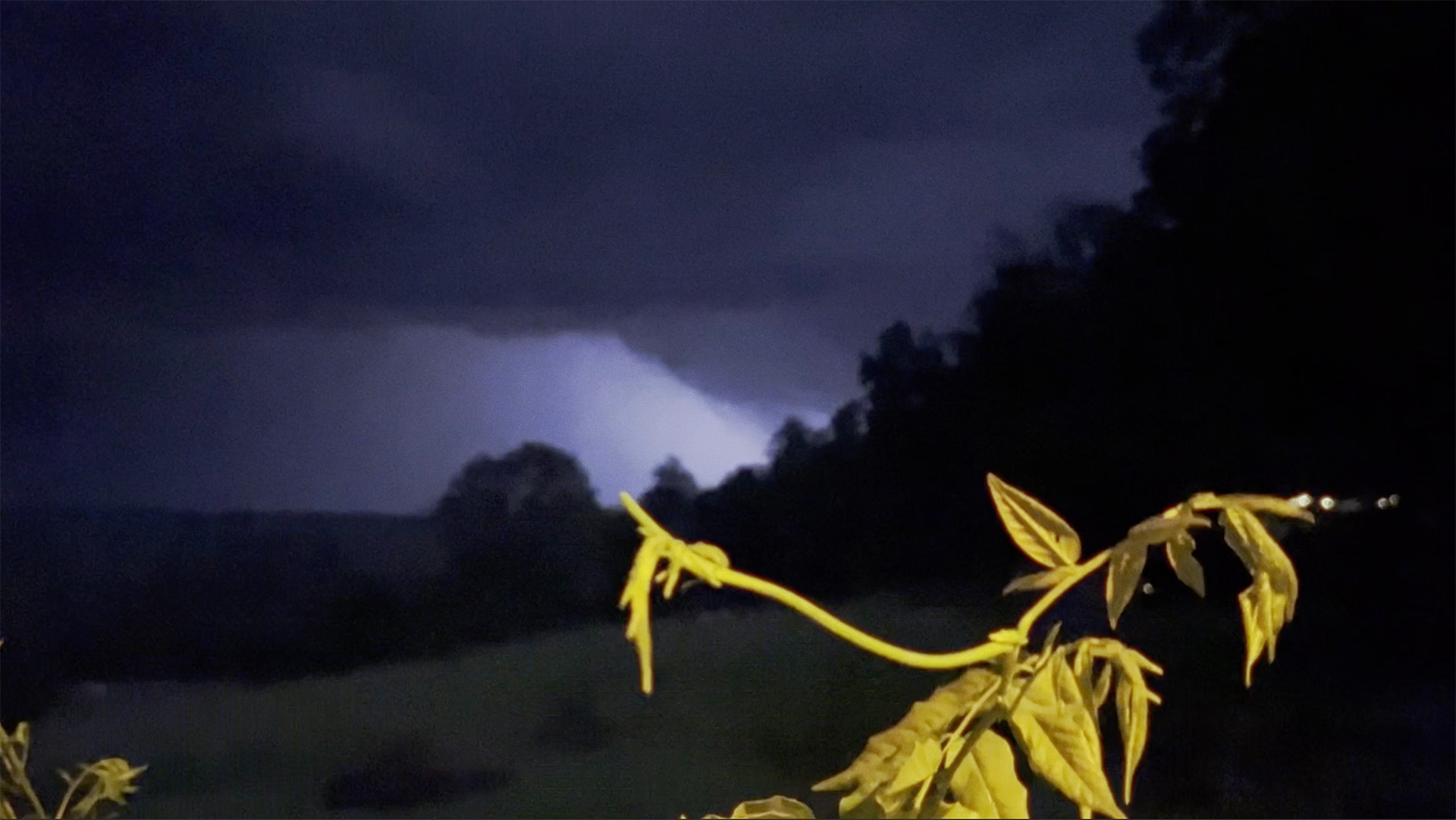
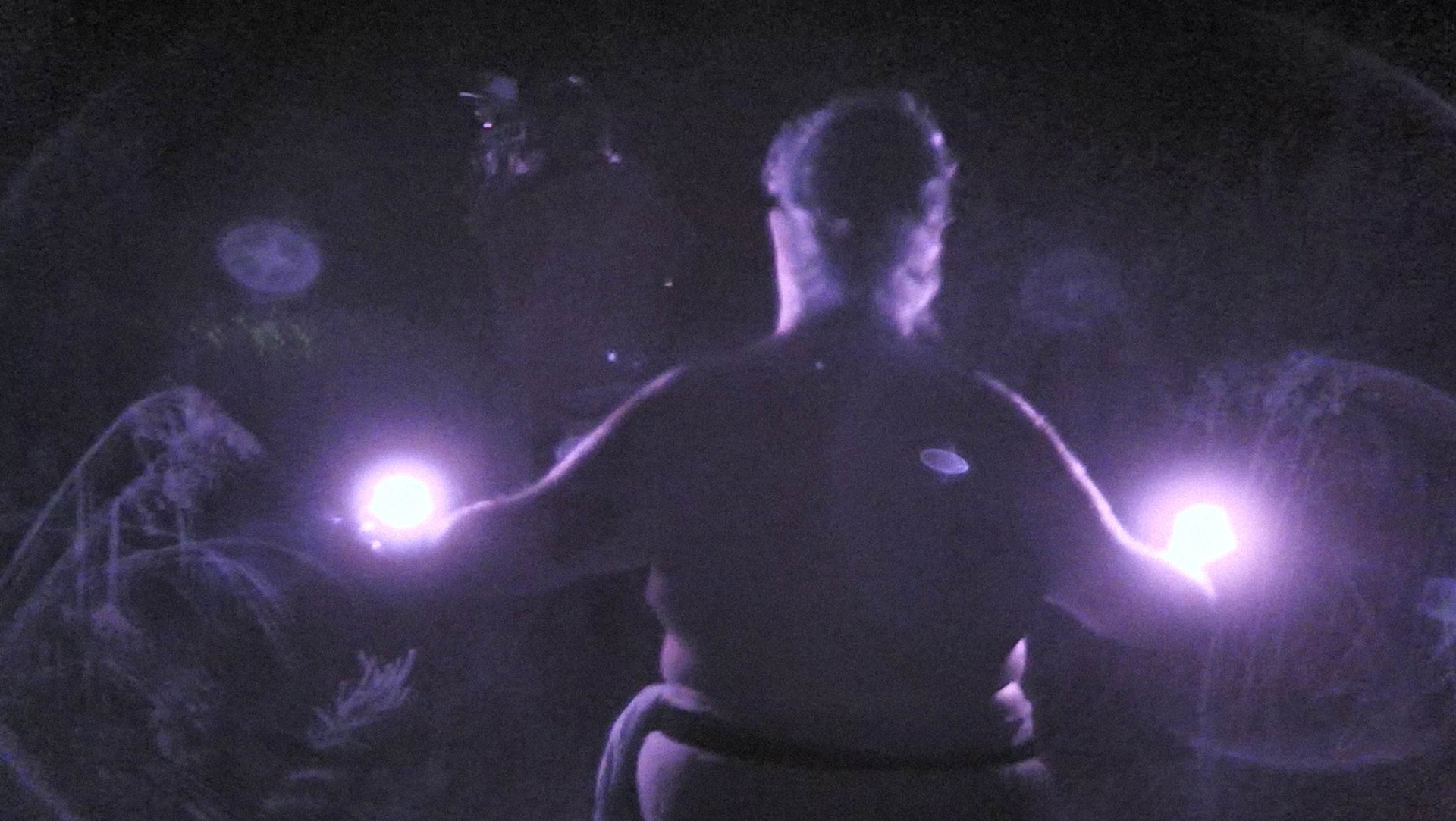
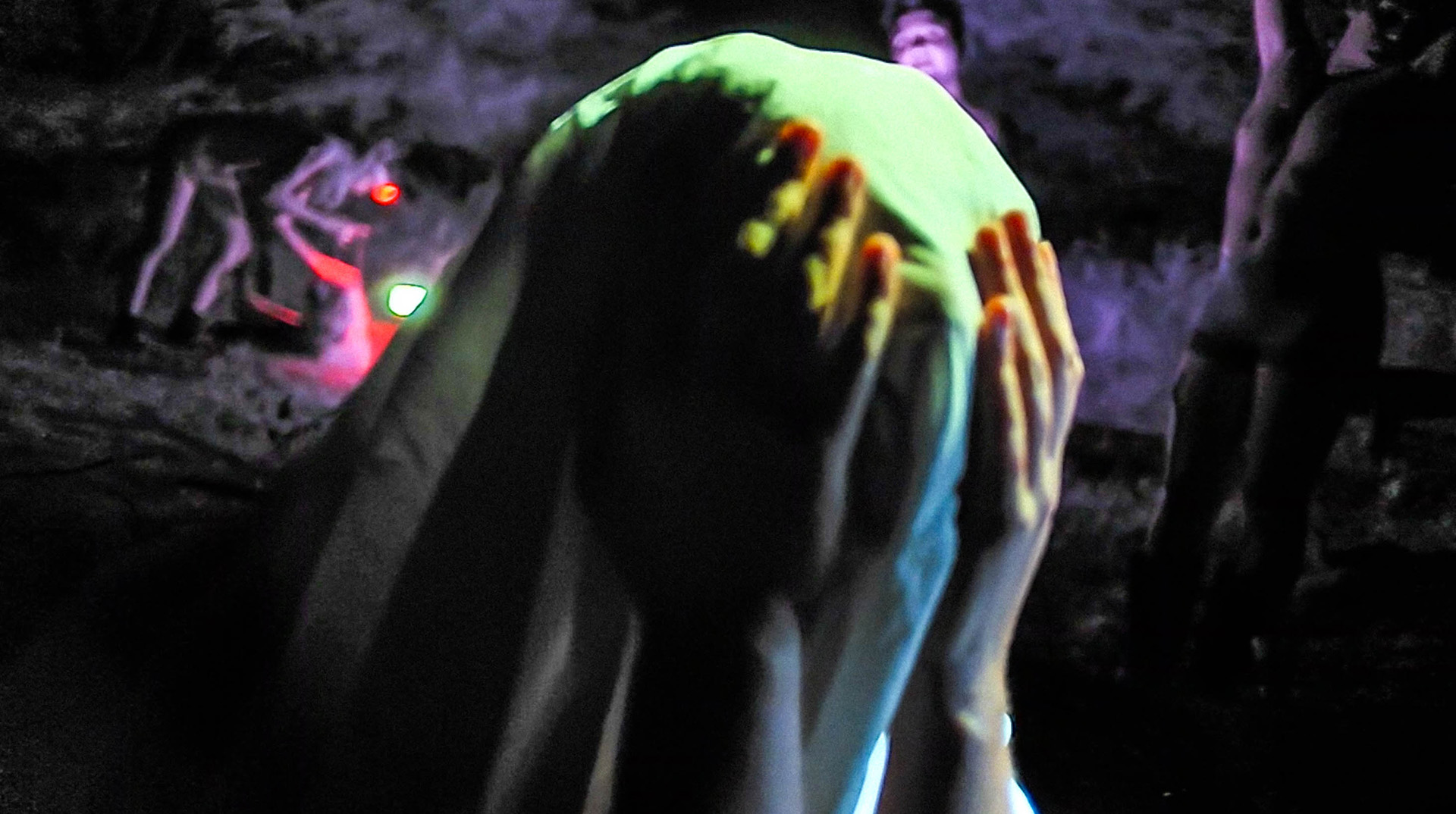
QuERC is grounded in the erotics of bringing conductive bodies into contact, putting into practice Barad’s notion of “Posthumanist performativity.” QuERC II (2024) focused on exploring performative modes of embodied research viacabaret, clowning, and slide lectures, while at QuERC III, performativity surfaced more through spontaneous activation of our shared environment. Evie Horton’s wood-shop workshop produced ritual objects and costumes for our thematic explorations of the sacred and the arcane, while Lindsey Dahms-Nolan repeatedly personified the collective’s shifting spirit, first as a human dinner table, then as our angelic mýstis parthénos. Hwiy Chang built many fires to sustain us through an unexpected and unseasonable August chill in the Catskills.
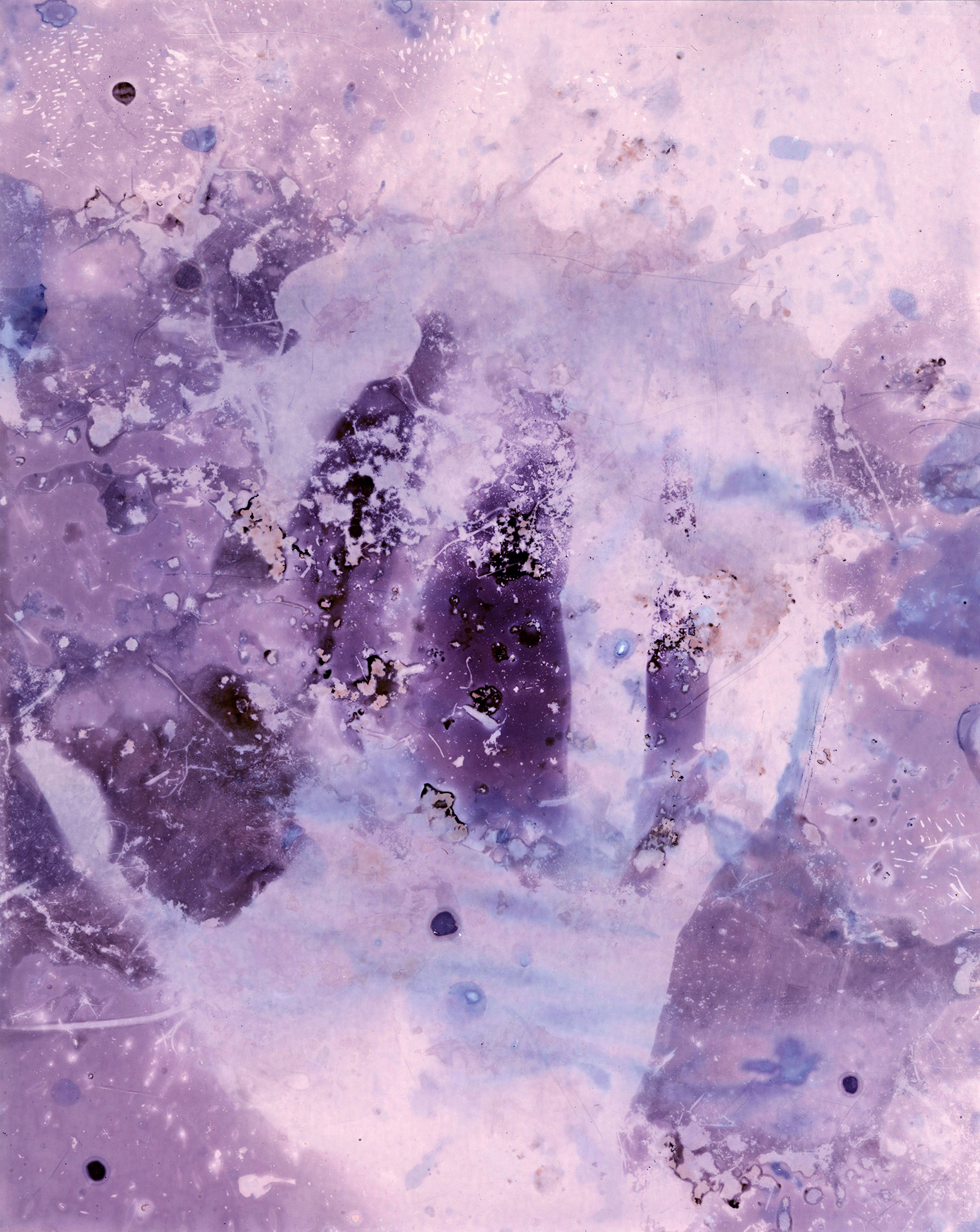
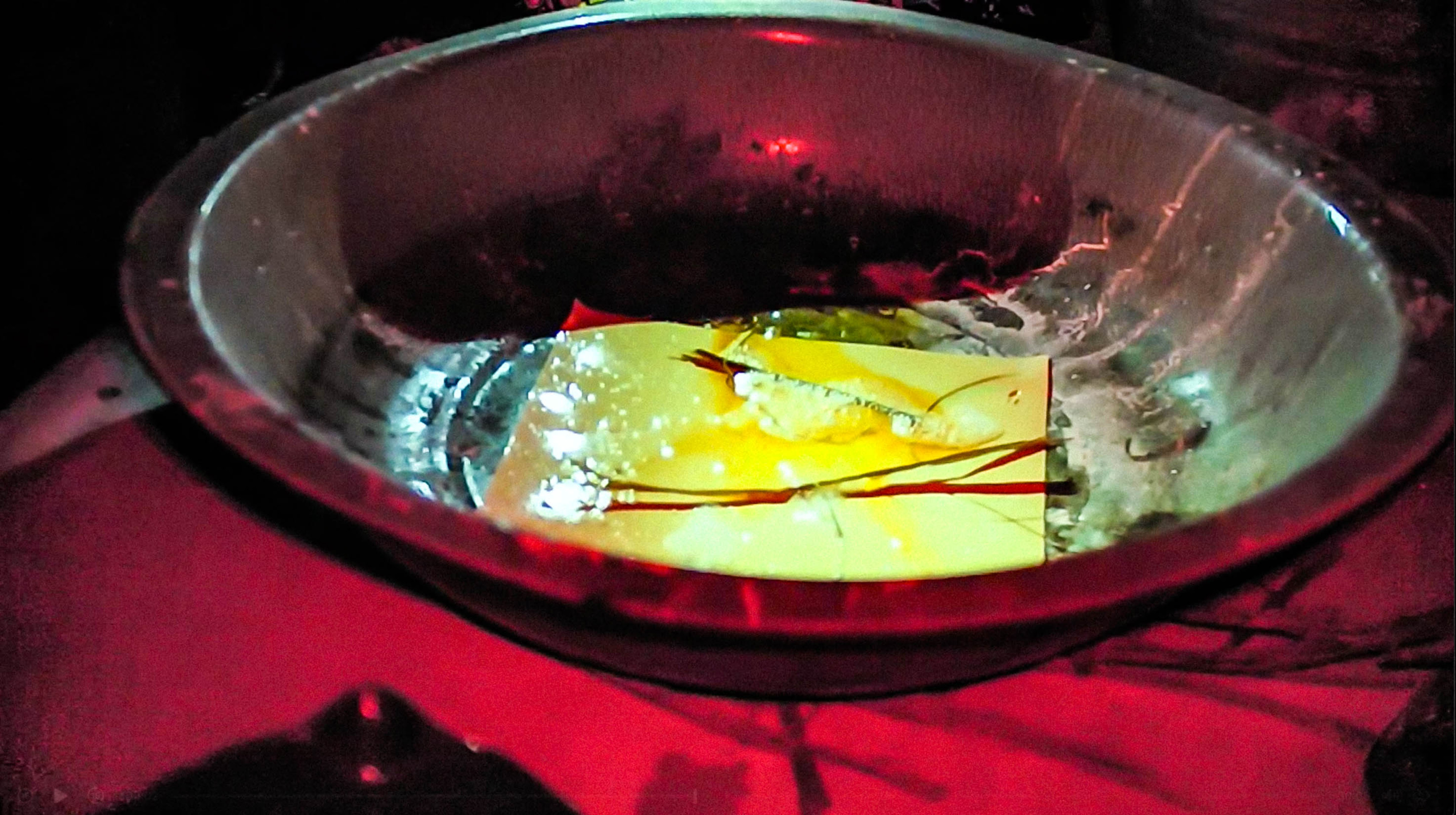
Under the night sky, Danielle Goshay led a camera-less photogram workshop, teaching us to elementally manipulate silver-gelatin coated paper. Her process of exposing photo emulsion to water, flame, and earth reveals the alchemical character of matter itself. Each photogram is not an image, but the material trace of and intra-action between—among other actors—light, silver halide, and conductive moisture. The technology of photography allows us to materialize and “fix” a set of hidden processes—but only ever on a limited time-scale. A photograph never becomes an inert object, but remains chemically alive, continuing to react to light long after its making. (Like a dormant seed, it’s not energetically dead, only stabilized). Each act of viewing photographs by shedding light upon them continues their exposure, presenting significant challenges for their conservation as objects. Goshay leans into this instability, often wheat-pasting her prints outdoors, facilitating another material “exposure” that will modify the works, ultimately to the point of disintegration, emphasizing the Baradian viewpoint that a photograph is a process rather than an object. [19]
Under the night sky, Danielle Goshay led a camera-less photogram workshop, teaching us to elementally manipulate silver-gelatin coated paper. Her process of exposing photo emulsion to water, flame, and earth reveals the alchemical character of matter itself. Each photogram is not an image, but the material trace of and intra-action between—among other actors—light, silver halide, and conductive moisture. The technology of photography allows us to materialize and “fix” a set of hidden processes—but only ever on a limited time-scale. A photograph never becomes an inert object, but remains chemically alive, continuing to react to light long after its making. (Like a dormant seed, it’s not energetically dead, only stabilized). Each act of viewing photographs by shedding light upon them continues their exposure, presenting significant challenges for their conservation as objects. Goshay leans into this instability, often wheat-pasting her prints outdoors, facilitating another material “exposure” that will modify the works, ultimately to the point of disintegration, emphasizing the Baradian viewpoint that a photograph is a process rather than an object. [19]
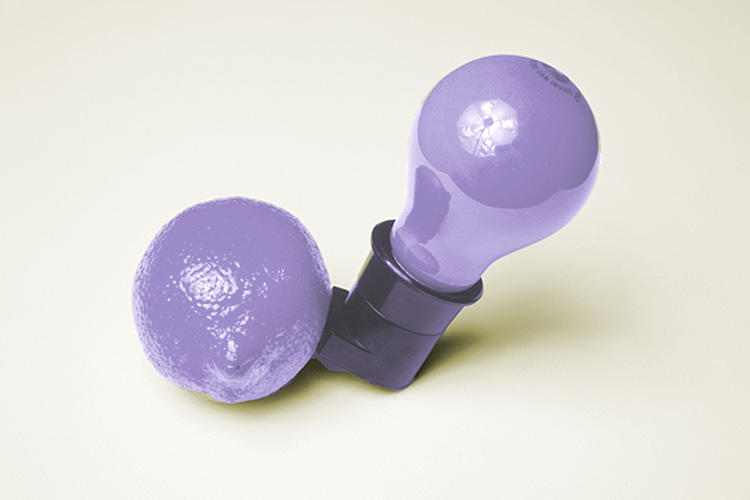
Thoughts of Joseph Beuys return here, for Beuys was also an alchemist—a practitioner attuned to the transformative spirit immanent in matter. Beuys exhibited a series of simple batteries as sculptures, showing the energetic potential latent in trays of fat, jars of saltwater, or lemons wired to lightbulbs (see Capri Battery, 1985). These works are mediations on the energetic potential latent in ordinary materials. Like Goshay’s photograms, they invite us to see matter as charged, tentative, seeking conduction. The lemon-battery is a common demonstration in science classrooms, for it shows that an electrochemical cell is merely—magically—a partition where differences are bridged. In both biological and electrical contexts, the term “cell” is derived in reference to a bounded architecture, one that makes agency possible by introducing the chance for exchange.
Each year of QuERC, we find some unifying interests emergent in the research collective (2023, see bugs; 2024, see clowning). Noting these patterned interests is integral to expanding the theory and praxis of queer ecologies. In 2025, a topic that surfaced repeatedly was skin. In Theo Eleizer’s ritual tattooing practice, emphasis is placed not on the relative permanence of ink, but the relative ephemerality of a human body. In Suzy Slykin’s clear sculptures of medical curtains and handbags, which are made from a glue-based “skin,” attention is drawn to clinical and social boundaries between privacy and transparency. Glue itself is traditionally made from the collagen of animal skin, while handbags are conventionally made from leather—a material which, within fetish practices that test the limits of the sensuous self, often serves as a material and symbolic skin that both binds and liberates (soma initiates gnosis).
Each year of QuERC, we find some unifying interests emergent in the research collective (2023, see bugs; 2024, see clowning). Noting these patterned interests is integral to expanding the theory and praxis of queer ecologies. In 2025, a topic that surfaced repeatedly was skin. In Theo Eleizer’s ritual tattooing practice, emphasis is placed not on the relative permanence of ink, but the relative ephemerality of a human body. In Suzy Slykin’s clear sculptures of medical curtains and handbags, which are made from a glue-based “skin,” attention is drawn to clinical and social boundaries between privacy and transparency. Glue itself is traditionally made from the collagen of animal skin, while handbags are conventionally made from leather—a material which, within fetish practices that test the limits of the sensuous self, often serves as a material and symbolic skin that both binds and liberates (soma initiates gnosis).
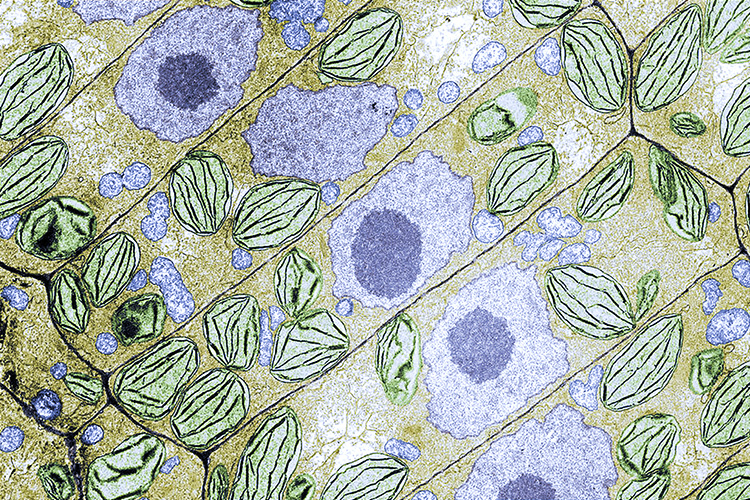
A skin separates an inside from an outside, but it is also always a plane of exchange between the two. Skins remind us that inside and outside are not binary categories, but states of matter in energetic flux. The original unit of biological skin is a cell membrane; the organ known as one’s skin is composed of over a trillion individual cells. Some origin-of-life theories even suggest that the concept of “the body” itself began as an electrically-charged bubble in porous rock on the deep seafloor. At certain hydrothermal vents, alkaline fluids rise from oceanic crust and meet more acidic seawater, forming wet ‘batteries’ across thin mineral walls. These inorganic membranes concentrate chemicals on one side, allowing only selective transfer across the charged boundary. These may have been the first metabolic systems, setting a template for the charged inside-outside relation, which organic molecules gradually learned to replicate. [20]
Library scientist and artist Klara Vertes, in a lecture on queer archival methods at QuERC III, proposed conceiving of an archive as a matrix of boxes. Rather than a cabinet of taxonomic “files,” the archive becomes a mesh of neighboring cells. Each box is a compartment with its own internal atmosphere, but it gains salience in relation to the boxes around it through adjacency, cross-reference, and leakage. This archive echoes Barad’s intra-action, as well as cellular structure: discrete volumes separated by thin skins, across which signals and materials might pass. [21]
Opening an archive, then, is less like consulting a fixed record than triggering depolarization in a tissue, creating a local disturbance that ripples outward to some degree. Knowledge always changes in the act of being accessed, and what it becomes depends on the conditions of its reading. A seed is also an archival container, which is not to say it is merely a storehouse of fixed knowledge. It is the alchemist’s dry flask, holding concentrated fragments of both history and the future. “Just add water” to break the hermetic seal, beginning a cascading chain of reactions—i.e., life.
The Queer Ecologies Research Collective is a body insofar as it is a pattern of relation: a temporary congealing of energies, practices, desires, and materials that meet within a shared membrane. QuERC is not an organism, an institution, or a stable identity. It is a body electrome: an arrangement of differences brought into contact, generating currents that cannot be attributed to any single participant or discipline. Like a seed, it does not contain knowledge as a static reserve, but holds potentials that are only activated through encounter. What QuERC generates—its insights, performances, publications, rituals—are flickerings of relation, brief illuminations that occur when separate charges find a conduit. Agency (as in, what we are capable of doing) is situational and collective, arising when a shared field is shaped by what holds, what leaks, and what breaks open.
Library scientist and artist Klara Vertes, in a lecture on queer archival methods at QuERC III, proposed conceiving of an archive as a matrix of boxes. Rather than a cabinet of taxonomic “files,” the archive becomes a mesh of neighboring cells. Each box is a compartment with its own internal atmosphere, but it gains salience in relation to the boxes around it through adjacency, cross-reference, and leakage. This archive echoes Barad’s intra-action, as well as cellular structure: discrete volumes separated by thin skins, across which signals and materials might pass. [21]
Opening an archive, then, is less like consulting a fixed record than triggering depolarization in a tissue, creating a local disturbance that ripples outward to some degree. Knowledge always changes in the act of being accessed, and what it becomes depends on the conditions of its reading. A seed is also an archival container, which is not to say it is merely a storehouse of fixed knowledge. It is the alchemist’s dry flask, holding concentrated fragments of both history and the future. “Just add water” to break the hermetic seal, beginning a cascading chain of reactions—i.e., life.
The Queer Ecologies Research Collective is a body insofar as it is a pattern of relation: a temporary congealing of energies, practices, desires, and materials that meet within a shared membrane. QuERC is not an organism, an institution, or a stable identity. It is a body electrome: an arrangement of differences brought into contact, generating currents that cannot be attributed to any single participant or discipline. Like a seed, it does not contain knowledge as a static reserve, but holds potentials that are only activated through encounter. What QuERC generates—its insights, performances, publications, rituals—are flickerings of relation, brief illuminations that occur when separate charges find a conduit. Agency (as in, what we are capable of doing) is situational and collective, arising when a shared field is shaped by what holds, what leaks, and what breaks open.
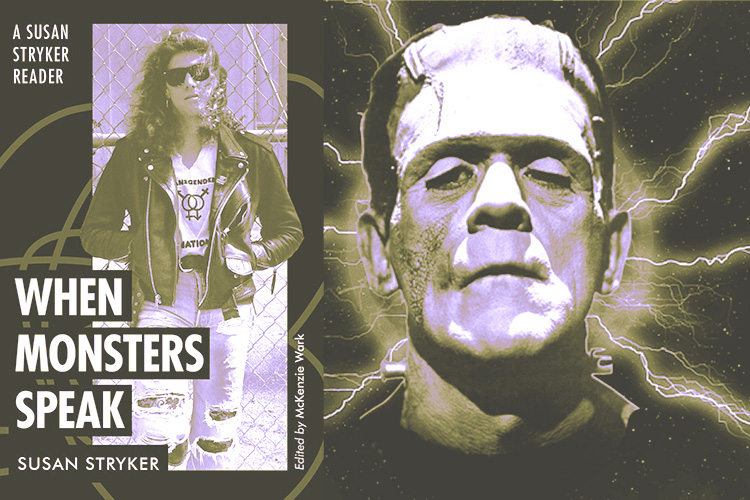
Susan Stryker, a significant generator in the field of trans studies, articulates this condition of agency from within her own bodily experience, describing subjectivity as a membranous process of rupture and enclosure:
Stryker manifests Barad’s idea that “agency is a matter of changes in the apparatuses of bodily production.” Agency is an ongoing labor of remaking the boundary conditions of the self, and an insistence on becoming otherwise. Together, Barad and Stryker make legible the dynamic at work in QuERC, which stages a “body” as a field of charge, tension, risk, and creative instability. Like lightning contained within a storm cloud, most of the energy generated by QuERC remains internal, invisible from outside the system. But when a conductive path opens, the charge may find a return stroke. This essay is one such path: a brief charge, a probing gesture, a flash carrying the field of QuERC beyond the membrane of a temporary gathering.
In mystery traditions, gnosis is not merely information that can be taken up or set aside. It is not knowledge you carry, but knowledge that carries you past a point of reversal. It is a form of irreversible change for the body that receives it. Gnosis initiates soma. If this text carries a force, let it not resolve into definition. Let it travel, altering bodies. Let its charge be proven in its planting, in the bodies it touches and activates. Queer ecology is not a definition but a doing, a means of asking what forms of embodiment become possible.
“From my forward-facing perspective I look back on my body as a psychically bounded space or container that becomes energetically open through the break of its surface — a rupture experienced as interior movement, a movement that becomes generative as it encloses and invests in a new space, through a perpetually reiterative process of growing new boundaries and shedding abandoned materialities: a mobile, membranous, temporally fleeting and provisional sense of enfolding and enclosure. This is the utopian space of my ongoing poesis.” [22]
Stryker manifests Barad’s idea that “agency is a matter of changes in the apparatuses of bodily production.” Agency is an ongoing labor of remaking the boundary conditions of the self, and an insistence on becoming otherwise. Together, Barad and Stryker make legible the dynamic at work in QuERC, which stages a “body” as a field of charge, tension, risk, and creative instability. Like lightning contained within a storm cloud, most of the energy generated by QuERC remains internal, invisible from outside the system. But when a conductive path opens, the charge may find a return stroke. This essay is one such path: a brief charge, a probing gesture, a flash carrying the field of QuERC beyond the membrane of a temporary gathering.
In mystery traditions, gnosis is not merely information that can be taken up or set aside. It is not knowledge you carry, but knowledge that carries you past a point of reversal. It is a form of irreversible change for the body that receives it. Gnosis initiates soma. If this text carries a force, let it not resolve into definition. Let it travel, altering bodies. Let its charge be proven in its planting, in the bodies it touches and activates. Queer ecology is not a definition but a doing, a means of asking what forms of embodiment become possible.
____________________
Notes
[1] Karen Barad, “Posthumanist Performativity,” Signs Vol. 8, No. 3 (2003): 821.
[2] Participants in the first QuERC included Nick di Benedetto and Alex A. Jones, Nicolas Baird (The Institute of Queer Ecology), Pia Bakala, Joanie Cappetta, Maurício Chades, briar coleman, Adjua Gargi Nzinga Greaves, Cameron Klavsen, Lee Pivnik (The Institute of Queer Ecology), Darian Razdar, Cy X, Erin Montanez, and Bang Tran.
[3] Timothy Morton, “Guest Column: Queer Ecology,” MLA 125.2 (2010): 273–282.
[4] Eve Kossofsky Sedgwick, Tendencies (Duke University Press: 1993), 8.
[5] See Karen Barad, Meeting the Universe Halfway: Quantum Physics and the Entanglement of Matter and Meaning (Duke University Press, 2007).
[6] Jose Estaban Muñoz, Cruising Utopia (New York University Press, 2010), 1.
[7] See The Sacred Conspiracy: The Internal Papers of the Secret Society of Acéphale and Lectures to the College of Sociology, ed. by Alastair Brotchie and Marina Galletti (Atlas Press, 2018).
[8] See Emile Durkheim, The Elementary Forms of Religious Life, 1912. Bataille’s interest in ritual sacrifice is explored in multivolume works including Summa Atheologica (1943–1945) and The Accursed Share (1949). For a useful introduction to Bataille’s ideas about ritual, see Moses May-Hobbs, “Georges Bataille: Controversial Views on Religious Rituals,” The Collector (online), 7 January 2023. https://www.thecollector.com/georges-bataille-controversial-views-on-religious-rituals/.
[9] Georges Bataille, “La conjuration sacrée,” [The Sacred Conspiracy], Acéphale 1: June 1936.
[10] Eber Hampton, “Memory Comes Before Knowledge: Research May Improve if Researchers Remember Their Motives,” Canadian Journal of Education Vol 21 (1995): 46–54. https://doi.org/10.14288/cjne.v21i.195782.
[11] Shawn Wilson, Research is Ceremony: Indigenous Research Methods (Fernwood Publishing, 2008), 8–11.
[12] ‘Entheogenic’ means the birth of the ‘Divine Within.’ See Peter Lamborn Wilson, Ploughing the Clouds: The Search for Irish Soma (City Lights Publishers, 2001).
[1] Karen Barad, “Posthumanist Performativity,” Signs Vol. 8, No. 3 (2003): 821.
[2] Participants in the first QuERC included Nick di Benedetto and Alex A. Jones, Nicolas Baird (The Institute of Queer Ecology), Pia Bakala, Joanie Cappetta, Maurício Chades, briar coleman, Adjua Gargi Nzinga Greaves, Cameron Klavsen, Lee Pivnik (The Institute of Queer Ecology), Darian Razdar, Cy X, Erin Montanez, and Bang Tran.
[3] Timothy Morton, “Guest Column: Queer Ecology,” MLA 125.2 (2010): 273–282.
[4] Eve Kossofsky Sedgwick, Tendencies (Duke University Press: 1993), 8.
[5] See Karen Barad, Meeting the Universe Halfway: Quantum Physics and the Entanglement of Matter and Meaning (Duke University Press, 2007).
[6] Jose Estaban Muñoz, Cruising Utopia (New York University Press, 2010), 1.
[7] See The Sacred Conspiracy: The Internal Papers of the Secret Society of Acéphale and Lectures to the College of Sociology, ed. by Alastair Brotchie and Marina Galletti (Atlas Press, 2018).
[8] See Emile Durkheim, The Elementary Forms of Religious Life, 1912. Bataille’s interest in ritual sacrifice is explored in multivolume works including Summa Atheologica (1943–1945) and The Accursed Share (1949). For a useful introduction to Bataille’s ideas about ritual, see Moses May-Hobbs, “Georges Bataille: Controversial Views on Religious Rituals,” The Collector (online), 7 January 2023. https://www.thecollector.com/georges-bataille-controversial-views-on-religious-rituals/.
[9] Georges Bataille, “La conjuration sacrée,” [The Sacred Conspiracy], Acéphale 1: June 1936.
[10] Eber Hampton, “Memory Comes Before Knowledge: Research May Improve if Researchers Remember Their Motives,” Canadian Journal of Education Vol 21 (1995): 46–54. https://doi.org/10.14288/cjne.v21i.195782.
[11] Shawn Wilson, Research is Ceremony: Indigenous Research Methods (Fernwood Publishing, 2008), 8–11.
[12] ‘Entheogenic’ means the birth of the ‘Divine Within.’ See Peter Lamborn Wilson, Ploughing the Clouds: The Search for Irish Soma (City Lights Publishers, 2001).
[13] Beuys in conversation with Richard Demarco, 1982. Quoted in David Levi-Strauss, “Beuys in Ireland: 7000 Oaks on the Hill of Uisneach,” in Alternatives: Global, Local, Political 31, no. 1 (2006): 1014..https://www.jstor.org/stable/40645175?seq=4.
[14] The bright return-stroke of a cloud to ground lightning flash travels at about one third the speed of light, or in a matter of nanoseconds. Interesting how the movement of lightning is too fast to see, while the movement of plants is too slow to see. Both temporal processes are made more visible by the manipulation of time with photography.
[15] Interestingly, the acorn seed of Quercus itself is not a long-lived seed. It is classed as a “recalcitrant” seed, versus “orthodox” types like the Nelumbo(Lotus) that exhibit extreme longevity. In the case of the Oak, it is the tree that grows from the seed, rather than the seed itself, that can persist over deep time scales; for instance, there is a grove of clonal scrub oak (Quercus palmeri) in California whose age is measured at over 13,000 years. 10.1371/journal.pone.0008346
[16] See Michael Levin, “Molecular bioelectricity in developmental biology: New tools and recent discoveries,” in Bioessays 34 (2012): 205–217. DOI 10.1002/bies.201100136.
[17] Karen Barad, “Transmaterialities: Trans*/Matter/Realities and Queer Political Imaginings, ” GLQ: A Journal of Lesbian and Gay Studies 21:2–3 (2015), 387–421.
[18] Bataille, “The Solar Anus,” 1927.
[19] It cannot be entirely coincidental that Danielle, known to us as De, shares a moniker with the famous sixteenth-century alchemist John Dee.
[20] See Victor Sojo et al, “The Origin of Life in Alkaline Hydrothermal Vents,” Astrobiology 16 (2): 2016/ https://pubmed.ncbi.nlm.nih.gov/26841066/; Julyan H.E. Cartwright and Michael J. Russel, “The origin of life: the submarine alkaline vent theory at 30.” Interface Focus 9: 2019. http://dx.doi.org/10.1098/rsfs.2019.0104.
[21] This structure also recalls cellular automata, most notably Conway’s Game of Life, a computational model based on the intra-action of a regular grid of cells, which can produce complex simulations of certain biological phenomena.
[22] Susan Stryker, “Dungeon Intimacies: The Poetics of Transsexual Sadomasochism,” Parallax 14, no. 1 (2008): 36. Quoted in Barad, 2015
[14] The bright return-stroke of a cloud to ground lightning flash travels at about one third the speed of light, or in a matter of nanoseconds. Interesting how the movement of lightning is too fast to see, while the movement of plants is too slow to see. Both temporal processes are made more visible by the manipulation of time with photography.
[15] Interestingly, the acorn seed of Quercus itself is not a long-lived seed. It is classed as a “recalcitrant” seed, versus “orthodox” types like the Nelumbo(Lotus) that exhibit extreme longevity. In the case of the Oak, it is the tree that grows from the seed, rather than the seed itself, that can persist over deep time scales; for instance, there is a grove of clonal scrub oak (Quercus palmeri) in California whose age is measured at over 13,000 years. 10.1371/journal.pone.0008346
[16] See Michael Levin, “Molecular bioelectricity in developmental biology: New tools and recent discoveries,” in Bioessays 34 (2012): 205–217. DOI 10.1002/bies.201100136.
[17] Karen Barad, “Transmaterialities: Trans*/Matter/Realities and Queer Political Imaginings, ” GLQ: A Journal of Lesbian and Gay Studies 21:2–3 (2015), 387–421.
[18] Bataille, “The Solar Anus,” 1927.
[19] It cannot be entirely coincidental that Danielle, known to us as De, shares a moniker with the famous sixteenth-century alchemist John Dee.
[20] See Victor Sojo et al, “The Origin of Life in Alkaline Hydrothermal Vents,” Astrobiology 16 (2): 2016/ https://pubmed.ncbi.nlm.nih.gov/26841066/; Julyan H.E. Cartwright and Michael J. Russel, “The origin of life: the submarine alkaline vent theory at 30.” Interface Focus 9: 2019. http://dx.doi.org/10.1098/rsfs.2019.0104.
[21] This structure also recalls cellular automata, most notably Conway’s Game of Life, a computational model based on the intra-action of a regular grid of cells, which can produce complex simulations of certain biological phenomena.
[22] Susan Stryker, “Dungeon Intimacies: The Poetics of Transsexual Sadomasochism,” Parallax 14, no. 1 (2008): 36. Quoted in Barad, 2015